Sorry, this activity is currently hidden
Section outline
-
Project Overview
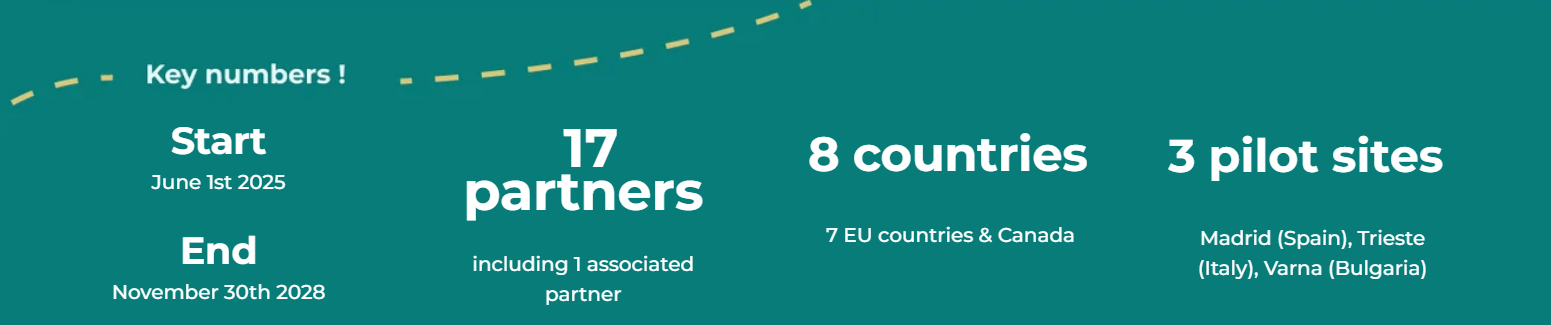
Gathering 17 partners including 1 associated partner across Europe and Canada, MODALSHIFT is a 42-month Horizon Europe project that aims to optimise multimodal and traffic management for an efficient transport network and seamless door-to-door mobility of passengers and freight.
Ten developed solutions (TRL5-6) will be validated in real transport operations in three case studies to demonstrate reliable performance, user acceptance and measurable impact on mobility efficiency and sustainability.
About the project
MODALSHIFT is the result of a European initiative aimed at improving low-carbon transportation systems in European cities.
In light of climate change challenges, the project addresses the need for new ways of travelling—especially for short- to medium-distance journeys—designed to minimise carbon footprints in accordance with recent CO₂ emission agreements. At the same time, it takes into account users’ need to move smoothly, reliably, and safely, in order to reduce current issues related to delays, interconnection gaps, and transfer inefficiencies.
Over the 42-month duration of the MODALSHIFT project, researchers and industry partners will work together to develop a framework for optimizing transport networks and traffic management. This will involve agent-based modelling, network mapping, and comprehensive data collection—including data on infrastructure, logistics, and mobility operators.
This data will enable both predictive and prescriptive analyses, scenario simulations based on synchro-modality, and the identification of optimal actions to improve the flow of transport systems. Three test sites—located in Bulgaria, Italy, and Spain—will play a central role in validating these approaches.By the end of the project, these studies will contribute to a rethinking of public transport services and the use of urban space. Additionally, the involvement of a Canadian partner aims to bring an external perspective and foster international collaboration on multimodality and climate change.
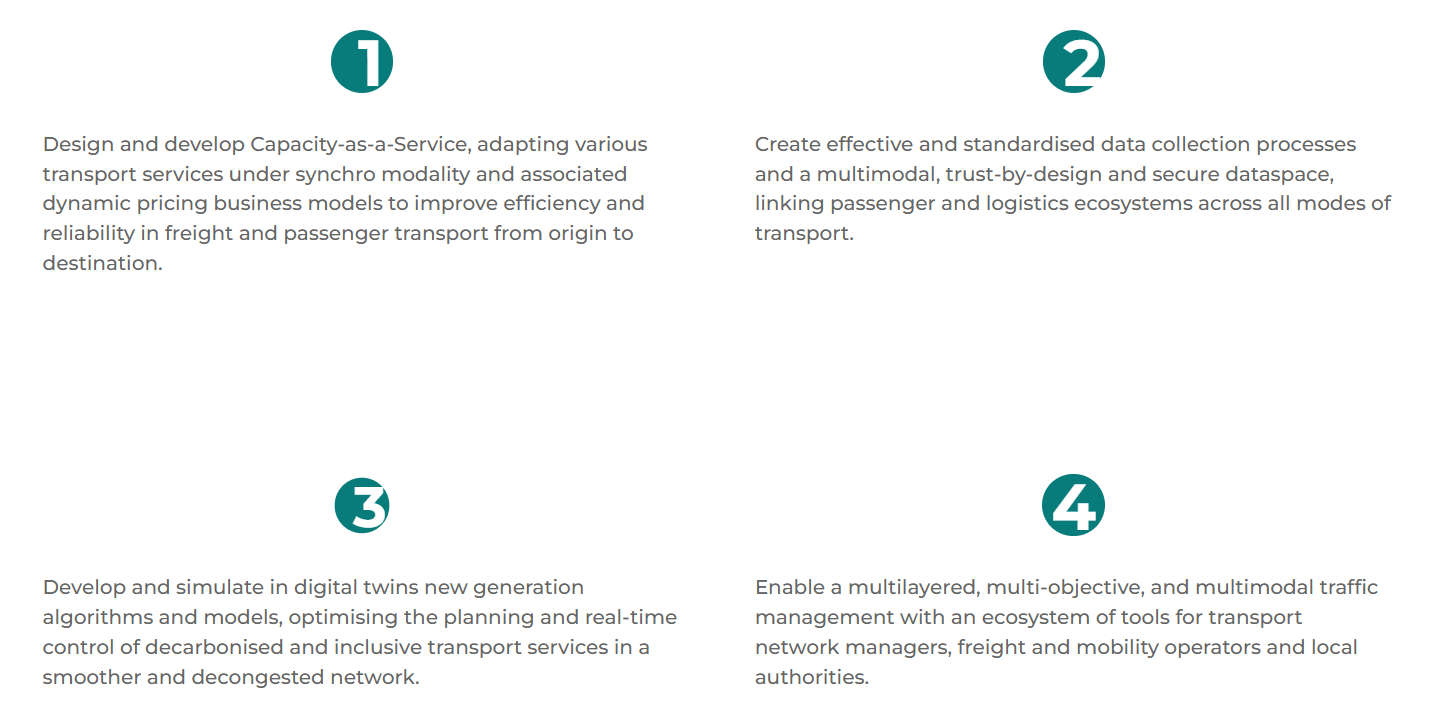
Objectives